
AI workflow automation
Put AI to work on a problem that matters.
TMG helps teams identify where AI and automation can make everyday work more useful, consistent and manageable.
01 / The opportunity
Start with the repeated friction.
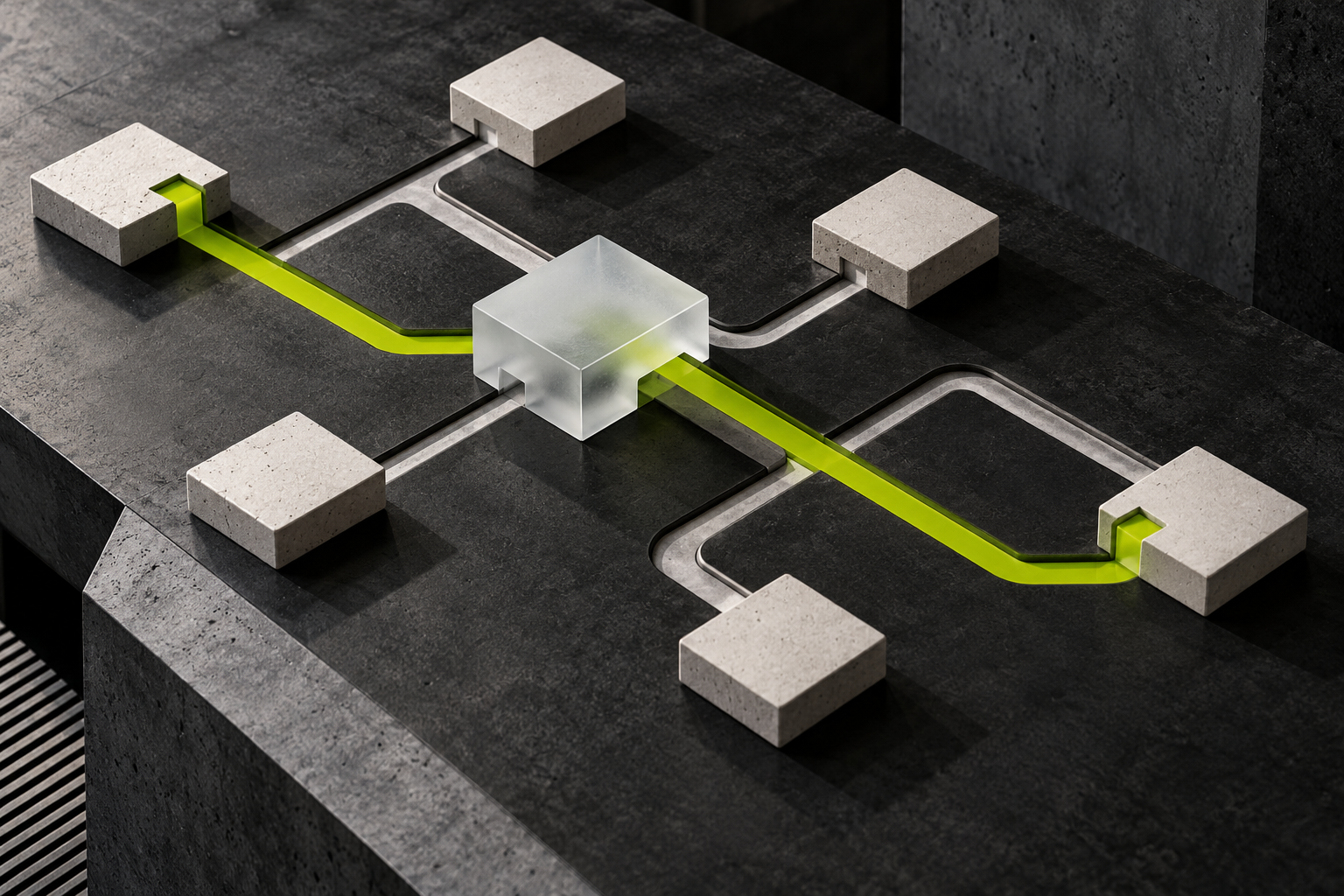
The starting point is the workflow: what arrives, what decisions people make, where information gets stuck and what a successful output looks like. From there, we identify the parts a system can support and the parts that need a person's judgment.
You may be moving information between tools, sorting incoming requests, rebuilding the same report or spending too much time turning raw inputs into a usable first draft. Those are opportunities to examine. They are not reasons to automate every step.
We help distinguish predictable work from work that requires context, accountability or a relationship. That makes the first build smaller, easier to test and easier to trust.
02 / How an engagement works
Map it.Build it.Make it useful.
01 / MAPFind the right first workflow.
Trace the inputs, decisions, exceptions and handoffs. Choose one use case with a clear owner.
02 / BUILDGive the system a clear job.
Design and, where scoped, build around your tools, permissions and review points.
03 / HAND OFFKnow how to check it.
Define success, handle errors and make the limits clear to the people using it.
03 / Human judgment stays in the loop
Useful systems. Clear boundaries.
Possible use cases include inquiry triage, internal research preparation, recurring reporting and structured content drafts. The right approach depends on your tools and permissions. A system that prepares a response for review is different from one authorized to send it; we define that boundary explicitly.
Before we start
Good questions.
Do we need to replace our tools?
We begin with the tools and access you already have. Any new service or subscription is a separate decision, not an assumed prerequisite.
Can the system operate without us?
Some steps can run automatically. Others need review, especially where an error creates a commitment or affects a customer. We agree on that boundary and test the exceptions.
How do we know it is helping?
We establish a baseline for the selected workflow and compare actual results. We do not promise time savings before observing the work.
What is a good first project?
A repeated task with a clear input, a clear output and an owner who can verify the result. Bring one workflow that regularly slows the team down.
Bring us the problem
Find the first useful automation.
Tell us what your team keeps doing by hand and which tools are involved.
Discuss your workflow →